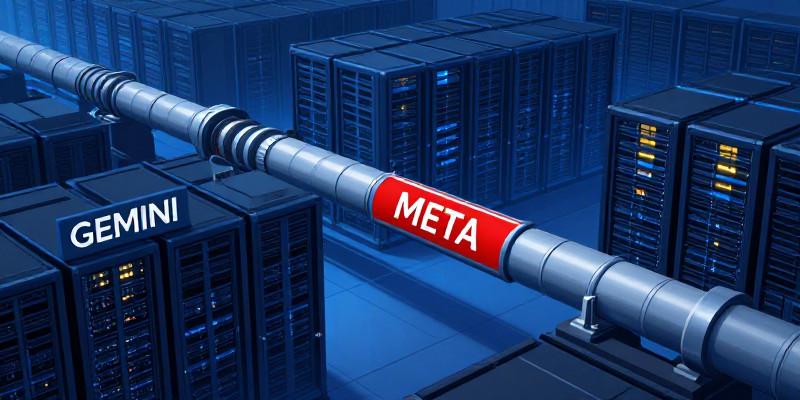
On 28 June 2026, news broke that Google has started limiting how much Meta can use its Gemini AI models. The reason is simple: Google does not have enough computing power to keep up with demand. Meta has grown heavily dependent on Gemini for many of its internal needs, and now it is being told that Google simply cannot provide the capacity it wants. Other clients are also affected.
This story matters because it shows a hidden side of the AI boom. Everyone talks about smarter models, but behind the scenes the industry is hitting a wall: there are not enough chips, data centers, or power to serve all the demand. Even companies spending tens of billions of dollars on infrastructure are feeling the squeeze.
For Meta, this is a strategic problem. Depending on a rival for AI compute is risky, but building an independent alternative takes years. The cap may push Meta to accelerate its own chip and data center plans faster than it wanted. For the wider market, it means AI services could become more expensive or harder to access as providers ration limited compute.
The bottleneck also affects smaller companies. When giants like Google and Meta fight over capacity, startups and smaller firms struggle even more to get the compute they need. This could slow down innovation because only the biggest players can afford to keep pace.
The takeaway is clear. The AI industry has built incredible models, but the physical infrastructure to run them widely is not keeping up. Until that changes, expect more stories of companies being told "no" by their cloud providers.