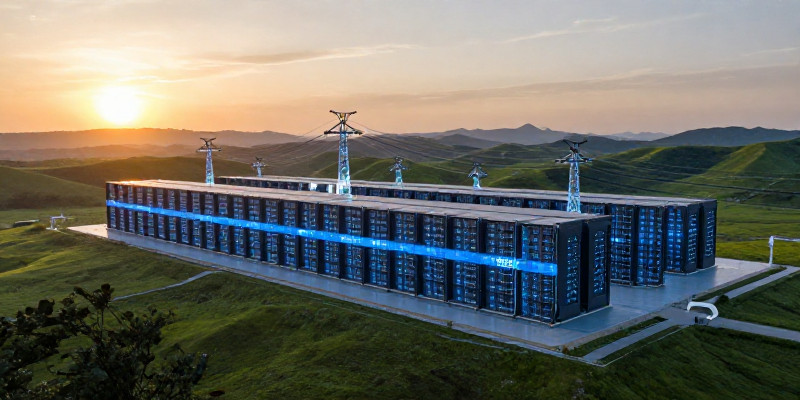
On 6 July 2026, Anthropic announced a 20-year lease agreement with TeraWulf, a crypto-mining company that has shifted into AI infrastructure, to power a new data center in Hawesville, Kentucky. The deal is expected to bring TeraWulf roughly $19 billion in revenue over its lifetime, making it one of the largest single AI infrastructure commitments to date.
The data center is scheduled to come online with an initial capacity in the second half of 2027, and is expected to ramp up to 401 megawatts of power delivery by 2028. That is enough electricity to support a very large AI training and inference operation. For Anthropic, the long-term lease secures the compute it needs to train and serve its Claude models for years to come.
The deal is part of a much bigger pattern. AI companies now believe that long-term access to power and data center space is one of their most important competitive advantages. Without it, even the best models cannot be trained or served at scale. Anthropic, like OpenAI, Google, and Meta, has been racing to lock down power contracts before rivals do.
The choice of partner is also notable. Crypto miners built massive power capacity during the last boom, but many are now struggling. Repurposing that infrastructure for AI workloads is a smart way out for them, and a fast way for AI companies to get space without waiting years to build new sites from scratch.
For Kentucky, the deal means jobs, tax revenue, and a new place on the AI map. For the broader industry, it is another reminder that the AI race is no longer just about software. It is now also a race for land, power, and the long-term deals that will decide who can afford to keep building.